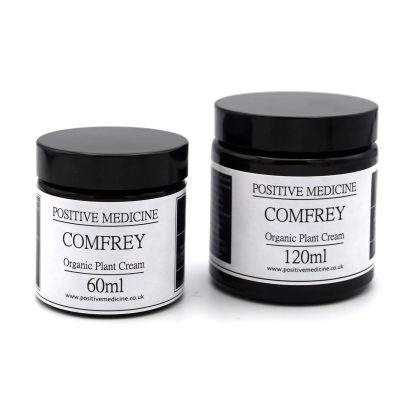
Comfrey (Symphytum officinale) is a perennial herb native to Europe and parts of Asia, traditionally found along hedgerows, riverbanks and field edges. The plant is characterised by its large, hairy leaves and bell-shaped flowers, typically purple or cream in colour.
Comfrey has a long-standing reputation in herbal medicine as a plant associated with tissue repair and regeneration, particularly in relation to bones, joints, muscles and connective tissues.
Traditionally Reported Benefits
In traditional European herbal medicine, comfrey oil (Symphytum officinale) has been widely used as an external preparation for conditions involving injury to bones, muscles, joints and connective tissue. Historical medical texts describe comfrey-infused oils as restorative remedies, particularly valued in recovery following trauma.
Traditional practitioners reported the use of comfrey oil in a range of musculoskeletal conditions, including:
-
sprains and strains
-
bruises and contusions
-
muscle and joint discomfort
Comfrey oil was commonly applied externally to:
-
support tissue repair
-
ease discomfort following injury
-
promote recovery of damaged structures
It was particularly valued where symptoms were associated with:
-
impact or physical trauma
-
stiffness and reduced mobility
-
prolonged or slow healing
Traditional sources describe comfrey as a key remedy for bone and connective tissue injuries. Oil preparations were used in cases involving:
-
fractures (after the acute phase had passed)
-
tendon and ligament strain
-
joint injuries and overuse
where comfrey was believed to encourage restoration of damaged tissues. This long-standing use gave rise to comfrey’s traditional name, “knitbone.”
Comfrey oil was also traditionally employed for inflammatory conditions affecting deeper tissues. Massage with the oil was used to:
-
reduce swelling
-
ease inflammation
-
improve comfort and movement
Within traditional wound care, comfrey oil was applied to:
-
slow-healing wounds
-
cracked or damaged skin
-
areas requiring tissue regeneration
where it was believed to soothe irritation and support repair.
Classical herbalists including Dioscorides, Galen and later Culpeper documented comfrey’s extensive medicinal use. Culpeper described it as beneficial for “all wounds inward and outward,” noting its reputation for restoring damaged flesh and tissue.
By the 18th and 19th centuries, comfrey oil had become a standard household remedy across Europe, widely used for injury recovery, joint discomfort and support of musculoskeletal healing.
These reported benefits reflect centuries of traditional medical use and historical practice
Traditional Use
Comfrey has been used in European herbal practice for centuries and was historically known by the name “knitbone”, reflecting its traditional association with the healing of bones and connective tissue.
Traditional herbal texts describe comfrey as being used externally in the form of oils, ointments, poultices and compresses. These preparations were commonly applied to areas affected by bruising, strains, sprains, joint discomfort and muscular tension.
Herbalists historically valued comfrey for its soothing, cooling and supportive qualities when applied to the skin, particularly in situations involving impact, overuse or physical strain.
Historical Context
The name Symphytum is derived from the Greek word symphyo, meaning “to unite” or “to make grow together.” This reflects the plant’s long association with tissue repair and recovery in traditional medicine.
Comfrey appears in medieval European herbals and was widely used by folk healers, monks and country practitioners. Nicholas Culpeper and other traditional herbalists described comfrey as a plant of great value for the external treatment of injuries involving bones, joints and soft tissues.
In traditional gardening and agriculture, comfrey was also valued as a soil-nourishing plant, rich in minerals, reinforcing its reputation as a restorative herb.
Key Constituents & Traditional Rationale
One of the most well-known constituents of comfrey is allantoin, a compound naturally present in the plant. Allantoin has been widely studied for its role in supporting skin renewal and tissue regeneration.
In traditional herbal theory, comfrey was considered a plant that supported the body’s natural repair processes. Herbalists emphasised the use of the whole plant preparation, recognising the synergistic interaction between allantoin, mucilage, tannins and other plant compounds.
Comfrey oil preparations were traditionally chosen when the aim was to support recovery of tissues beneath the skin, such as muscles, ligaments and joints.
Scientific & Clinical Interest
Modern scientific research has investigated topical comfrey preparations in relation to musculoskeletal comfort and recovery.
Multiple randomised controlled trials have examined comfrey-based topical products for use in:
-
Muscle and joint discomfort
-
Strains and sprains
-
Bruising and contusions
-
Degenerative joint conditions
Clinical studies have reported positive outcomes in terms of reduced discomfort, improved mobility and decreased swelling when comfrey preparations were applied topically.
Research interest has focused particularly on comfrey’s topical use, where preparations are formulated to exclude internal exposure concerns while allowing the beneficial constituents to act at the site of application.
Skin & Musculoskeletal Applications
In traditional and contemporary herbal practice, comfrey oil has been used externally as part of massage, compresses and balms. It is often applied to areas experiencing:
-
Muscular tension or stiffness
-
Joint discomfort
-
Bruising or impact injuries
-
Overworked or strained tissues
The oil base allows for gentle massage, supporting circulation to the area and facilitating the traditional use of the plant’s constituents.
Safety Context
Historically, comfrey has been used externally rather than internally in modern herbal practice. Contemporary preparations focus on topical application to intact skin and are formulated in accordance with current safety guidelines.
This page provides educational information reflecting traditional use and research interest and does not constitute medical advice.
Summary
Comfrey oil represents a long-standing herbal preparation with deep roots in European tradition. Its historical association with tissue repair, combined with modern clinical interest in its topical application, supports its continued use within herbal and natural skincare traditions.
Used externally, comfrey oil remains valued for its role in supporting comfort, recovery and wellbeing of muscles, joints and connective tissues.
Botanical Information
• Botanical name: Symphytum officinale
• Common names: Comfrey, Knitbone
• Family: Boraginaceae
• Parts traditionally used: Leaves and roots (externally)
• Preparation: Herbal oil for external use