
Description
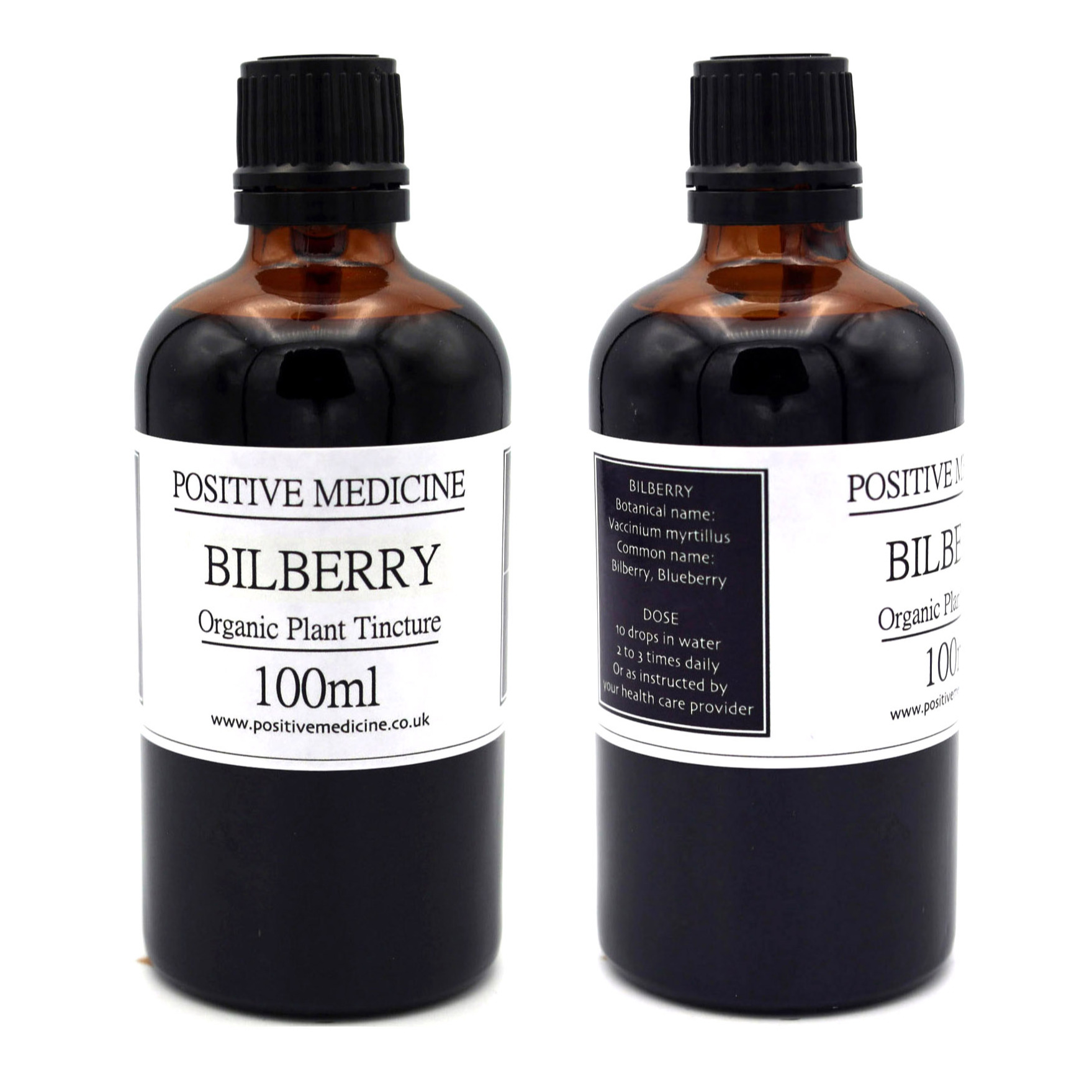
Bilberry tincture 
Bilberry is a small bush native to Britain and Europe that produces dark blue berries and is used to make organic bilberry tincture. While the blueberry is closely related, it is native to North America and differs slightly in composition. Bilberries have long been valued as a nutritious wild food and contain a range of naturally occurring vitamins and plant compounds.
NOTE: For regulatory reasons, product pages describe ingredients and traditional context only. Information on traditional benefits, historical uses and research can be found on the General Benefits – Traditional Use & Research page.
Pilots report.
Interest in bilberries increased during the Second World War, when pilots reported dietary associations involving bilberry preserves. This historical observation contributed to wider scientific and nutritional interest in the berry, particularly its rich pigmentation and traditional use. Bilberry has traditionally been valued as part of a whole-food approach, where herbs, berries, and diet were considered together in supporting general wellbeing. Its dark blue pigment reflects a high concentration of naturally occurring anthocyanins, which have been widely studied in nutritional research.
Bilberry as a superfood
In recent years, bilberry has developed a reputation as a nutrient-dense food. This reputation stems from its naturally high antioxidant content and long history of dietary use. Bilberries are often cited as an example of the value of whole berries and plant foods within traditional and modern nutritional approaches
History
Bilberries are a nutritious wild food. One of the earliest written references to their traditional use appears in the works of Abbess Hildegard of Bingen, a 12th-century visionary nun, herbalist, artist, and author.
In her writings, bilberry is noted among the plants valued in medieval herbal traditions. By the 16th century, bilberries were widely regarded as a valuable seasonal food and were commonly included in the diet, likely reflecting their nutritional content, including naturally occurring vitamin C.
Science
Bilberries have been gathered as a wild food for centuries. One of the earliest recorded references to their traditional use appears in the works of Hildegard of Bingen, a 12th-century abbess and herbal writer. By the 16th century, bilberries were widely recognised in Europe as a valuable seasonal food, particularly in regions where they grew abundantly.
Further reading: Learn more about the traditional and scientific interest in bilberry on our Research & Resources page.
General information
Botanical name: Vaccinium myrtillus
Common names: Bilberry, European blueberry, whortleberry
Family: Ericaceae
Habitat: Heaths, meadows, moist forests
Parts used: Fruit
Tincture strength: 3:1

Reviews
There are no reviews yet.