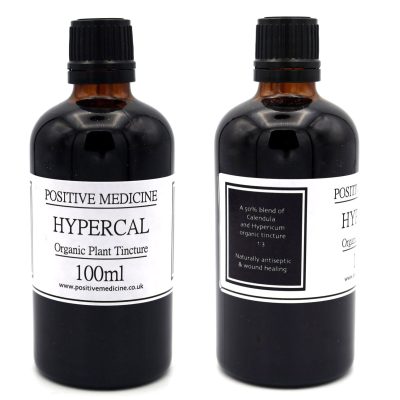
Hypercal is a traditional herbal combination made from equal parts Calendula (Calendula officinalis) and Hypericum (Hypericum perforatum). The pairing of these two plants has a long history within herbal practice, particularly in relation to external care and tissue healing.
Hypercal – Traditionally Reported Benefits
In traditional European herbal medicine, hypercal preparations made from Hypericum perforatum (St John’s Wort)have been widely used as external remedies for nerve-related pain, skin injury and inflammatory conditions. Historical herbal texts describe hypericum-infused oils and compounds as strengthening, protective and restorative.
Traditional practitioners reported the use of hypercal-type preparations for a range of external conditions, including:
-
nerve pain and neuralgia
-
bruising and trauma
-
sprains, strains and muscle injury
-
wounds and slow-healing skin damage
Hypericum preparations were commonly applied to:
-
calm nerve irritation
-
reduce pain associated with injury
-
support recovery of damaged tissues
They were particularly valued where pain was described as:
-
sharp or shooting
-
lingering after injury
-
associated with nerve involvement
Traditional sources describe hypericum as a key remedy for trauma. It was historically used following:
-
falls and blows
-
crush injuries
-
surgical procedures
where it was believed to support tissue repair and ease nerve-related discomfort.
Hypercal preparations were also traditionally employed for inflammatory skin conditions. Oils and lotions were applied to:
-
burns and scalds
-
sun damage
-
ulcers and cracked skin
where they were believed to:
-
soothe inflammation
-
protect damaged tissue
-
encourage healing
Within traditional medicine, hypericum was further used for emotional and nervous disturbance. Historical texts reference its use in cases of:
-
nervous tension
-
emotional shock
-
low mood following trauma
reflecting its long association with the nervous system.
Classical herbalists including Dioscorides, Galen and later Culpeper documented hypericum’s medicinal value. Culpeper described it as one of the best remedies for wounds and nerve pain, noting its use in injuries affecting both flesh and nerves.
By the 18th and 19th centuries, hypericum preparations had become common household remedies across Europe, widely used in external first-aid and trauma care.
These reported benefits reflect centuries of traditional medical use and historical practice
Traditional Herbal Context
Calendula and Hypericum have each been valued individually within European herbal medicine for centuries. During the 20th century, herbal practitioners began combining these two plants into a single preparation, recognising their complementary traditional roles.
This combined preparation became known as Hypercal, and it has since been included in traditional herbal first-aid and skin-care routines. Very useful in childbirth where skin has torn.
Calendula in Traditional Use
Calendula, commonly known as English Marigold, has a long history of external use in herbal traditions. It was traditionally included in preparations intended to support skin healing and cleanliness.
Historical herbal texts describe calendula as a gentle and versatile plant, often selected for use on delicate or sensitive areas. Its bright flowers led to its traditional association with warmth and restoration.
Hypericum in Traditional Use
Hypericum, also known as St John’s Wort, has been used traditionally in European herbal medicine for both internal and external applications. Externally, it was historically included in infused oils, lotions and tinctures used as part of skin and nerve-care traditions.
Herbalists have long noted Hypericum’s traditional association with areas rich in nerve endings and its inclusion in preparations intended to support comfort following physical stress.
Historical Accounts
One of the most well-known historical references to the combined use of Calendula and Hypericum comes from Dr Dorothy Shepherd, a British physician and homeopath of the early 20th century. In her book A Physician’s Posy, she documented her experiences using herbal preparations in challenging clinical environments.
Her writings contributed to wider interest in combining these two herbs within traditional practice, and the formulation later became known more widely as Hypercal.
Scientific & Research Interest
Modern scientific research has examined Calendula and Hypericum individually, exploring their phytochemical composition and biological activity.
Studies into Calendula have focused on its flavonoids, triterpenoids and carotenoids, while research into Hypericum has explored compounds such as hypericin and hyperforin. These investigations reflect scientific interest in the traditional external use of these plants.
Research literature includes studies examining their use in topical formulations and their relevance within broader discussions of skin physiology and tissue response.
Contemporary Traditional Use
Within modern herbal practice, Hypercal continues to be valued as a traditional external preparation. It is commonly diluted and used as part of skin-care routines, mouth rinses and washes, reflecting long-standing herbal approaches rather than pharmaceutical interventions.
The continued use of Hypercal reflects a traditional philosophy of combining complementary plants to create balanced botanical preparations.
Botanical Information
• Calendula officinalis
• Hypericum perforatum
• Common names: English Marigold, St John’s Wort
• Parts used: Flowers and aerial parts
Summary
Hypercal represents a traditional herbal pairing that brings together two plants with long and respected histories in European herbal medicine. Its continued use reflects both historical practice and ongoing scientific interest in the plants from which it is made.