Botanical Overview
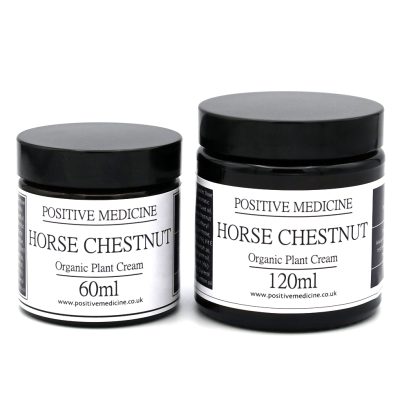
Horse chestnut (Aesculus hippocastanum) is a large deciduous tree native to southeastern Europe. The seeds, commonly referred to as conkers, have been used in traditional herbal practice for centuries, particularly in preparations intended for circulation and venous support.
Traditionally Reported Benefits
In traditional European herbal medicine, horse chestnut (Aesculus hippocastanum), prepared as creams and topical applications, has been widely used for conditions involving circulation, swelling and discomfort of the veins and connective tissues. Historical medical texts describe horse chestnut preparations as strengthening and toning to the vascular system.
Traditional practitioners reported the use of horse chestnut cream in a range of circulatory and musculoskeletal conditions, including:
-
heavy, tired or aching legs
-
swelling of the lower limbs
-
varicose veins and venous congestion
Horse chestnut cream was commonly applied to:
-
support healthy circulation
-
reduce sensations of heaviness
-
ease discomfort associated with poor venous return
It was particularly valued where symptoms were associated with:
-
prolonged standing or sitting
-
heat-related swelling
-
circulatory sluggishness
Traditional sources describe horse chestnut as beneficial for conditions involving fluid accumulation and tissue congestion. Topical applications were used for:
-
oedema and localised swelling
-
bruising and trauma
-
inflammatory discomfort
Horse chestnut cream was also traditionally employed for musculoskeletal complaints. Preparations were applied in cases of:
-
muscle aches and stiffness
-
joint discomfort
-
strain following physical exertion
Within traditional medicine, horse chestnut was further used for conditions affecting the rectal veins. Historical texts reference its use for:
-
haemorrhoids
-
anal discomfort
-
local inflammation
where topical application was believed to soothe tissues and support vascular tone.
By the 18th and 19th centuries, horse chestnut had become a recognised remedy in European herbal and early medical practice, widely used in creams, ointments and poultices for circulatory and inflammatory conditions.
These reported benefits reflect centuries of traditional medical use and historical practice
Traditional Use
In European herbal medicine, horse chestnut has long been associated with the health of the venous system. Traditional herbalists selected horse chestnut preparations for situations involving feelings of heaviness, swelling or fatigue in the legs.
External applications, including creams, ointments and compresses, were commonly used as part of daily routines intended to support skin tone and circulation.
Active Constituents
Horse chestnut seeds contain naturally occurring saponins, most notably aescin and aesculin, which have been the subject of extensive scientific interest. These compounds have been studied for their role in vascular tone, capillary integrity and inflammatory pathways.
Clinical & Scientific Research
Horse chestnut extract is one of the most extensively researched botanicals in relation to chronic venous insufficiency (CVI).
A Cochrane Review examining multiple controlled trials found horse chestnut extract to be more effective than placebo for improving symptoms associated with venous insufficiency, including leg discomfort and swelling. Several trials reported outcomes comparable to compression therapy in certain contexts.
Additional studies have explored horse chestnut’s antioxidant activity. Research published via academic institutions, including work referenced by Middlesex University, has highlighted horse chestnut’s capacity to scavenge free radicals, suggesting a potential role in protecting tissues from oxidative stress.
Topical Application Context
Topical horse chestnut preparations have been widely studied and used in clinical and cosmetic contexts. External use allows for targeted application to areas of concern and has made horse chestnut a common ingredient in leg creams and gels throughout Europe.
Summary
Horse chestnut occupies a unique position as one of the most clinically researched traditional botanicals used for venous and circulatory support. Its long-standing use, combined with modern clinical investigation, has secured its place in contemporary herbal and cosmetic practice.
Botanical Information
• Botanical name: Aesculus hippocastanum
• Common name: Horse Chestnut
• Family: Sapindaceae
• Parts used: Seeds