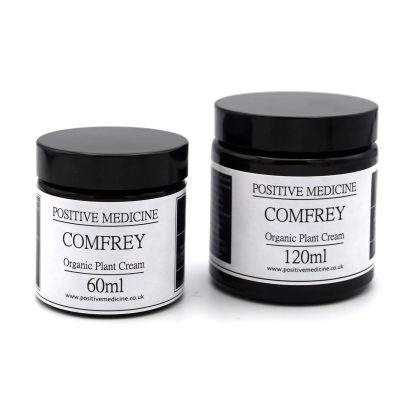
Comfrey (Symphytum officinale) is a perennial herb native to Europe and parts of Asia. It has large, hairy leaves and deep roots, and has been cultivated and gathered for centuries for its traditional applications.
Traditionally Reported Benefits
In traditional European herbal medicine, comfrey (Symphytum officinale), prepared as creams and ointments, has been widely used for conditions involving injury to muscles, joints, bones and connective tissue. Historical medical texts describe comfrey preparations as restorative and strengthening, particularly valued for recovery following trauma.
Traditional practitioners reported the use of comfrey cream in a range of musculoskeletal conditions, including:
-
sprains and strains
-
bruises and contusions
-
muscle and joint discomfort
Comfrey cream was commonly applied to:
-
support tissue repair
-
ease discomfort following injury
-
promote recovery of damaged structures
It was particularly valued where symptoms were associated with:
-
impact or trauma
-
stiffness and reduced mobility
-
prolonged healing times
Traditional sources describe comfrey as a key remedy for bone and connective tissue injuries. Topical preparations were used in cases involving:
-
fractures (after initial healing phase)
-
tendon and ligament strain
-
joint injuries
where it was believed to encourage restoration of damaged tissues. This long-standing use gave rise to comfrey’s traditional name, “knitbone”.
Comfrey cream was also traditionally employed for inflammatory conditions affecting the skin and underlying tissues. Preparations were applied to:
-
swollen or inflamed areas
-
painful joints
-
localised tissue inflammation
Within traditional medicine, comfrey was further used for skin repair. Herbal texts reference its use for:
-
slow-healing wounds
-
abrasions and cracked skin
-
ulcers and skin damage
where it was believed to support regeneration and soothe irritation.
Classical herbalists including Dioscorides, Galen and later Culpeper documented comfrey’s extensive medicinal use. Culpeper described it as beneficial for “all wounds inward and outward,” noting its ability to restore damaged tissues.
By the 18th and 19th centuries, comfrey creams and ointments had become standard household remedies across Europe, widely used for injury recovery, joint discomfort and tissue repair.
These reported benefits reflect centuries of traditional medical use and historical practice
Traditional topical use
Comfrey has a long-standing reputation in European herbal medicine as a plant associated with connective tissues. Traditional herbalists selected comfrey primarily for external preparations, including creams, oils and poultices.
It was historically used in situations involving physical strain, overworked muscles, joints and areas requiring prolonged recovery. Because of this association, comfrey earned the traditional name “knitbone” in herbal folklore.
Historical context
The name Symphytum derives from the Greek word symphyo, meaning “to bring together” or “to unite”. This reflects how comfrey was perceived historically in herbal traditions.
Comfrey appears in medieval herbals and was widely used by traditional healers throughout Europe. Nicholas Culpeper and later herbalists described comfrey as a plant with a strong affinity for tissue repair when applied externally.
Phytochemical interest
Scientific interest in comfrey has focused on its naturally occurring constituents, particularly allantoin, a compound widely studied in dermatological and cosmetic research for its role in skin renewal and cell turnover.
Research into topical comfrey preparations has explored its inclusion in products designed to support skin recovery and comfort when applied externally.
Modern research context
Several modern studies have examined topical comfrey preparations in relation to muscle and joint comfort. Research has focused on comfrey-containing topical products rather than internal use, reflecting contemporary safety guidance.
References to research reflect areas of scientific interest and investigation rather than medicinal claims.
Summary
Comfrey has a long and well-documented history of external use in herbal practice. Its traditional role in topical preparations, combined with continued scientific interest in its skin-related constituents, supports its ongoing use in modern botanical skincare.